
Artikeln har lagts till i varukorgen
Artikeln har lagts till i varukorgen
Malmö högskola
Ny bok | Häftad
Läs mer om olika typer av bindningar här.
LEVERANS: Skickas inom 6-14 vardagar.
LEVERANS: Vi skickar din beställning med Postnords Varubrev eller DHL Servicepoint.
Du betalar alltid endast 49 kr i fraktavgift inom Sverige, oavsett vikt eller antal böcker vid beställning av antikvariska och nya böcker från oss! Läs mer
Det gick inte att ladda hämtningstillgänglighet
ENDAST 49 kr i fraktavgift inom Sverige, oavsett antal böcker!
Du betalar alltid endast 49 kr i fraktavgift inom Sverige, oavsett vikt eller antal böcker vid beställning av antikvariska och nya böcker från oss! Läs mer
ÅNGERRÄTT inom 14 dagar efter leverans.
RETUR & ÅNGERRÄTT: Du har alltid 14 dagars ångerrätt oavsett anledning, från den dagen du tar emot din leverans.
Skulle vår beskrivning av skicket på boken misstämma eller om vi på annat sätt gjort fel, står vi självfallet för returfrakten.
I KORTHET: Utforska hur invandrarorganisationer formas av nationella system i Sverige och Italien. Lär dig om deras roll och påverkan på integration och politik.
Equal opportunities? utforskar hur svenska och italienska invandrarorganisationer formas av sina politiska kontexter. Du får insikter om hur dessa organisationer navigerar i olika system och resurser. Boken riktar sig till studenter och yrkesverksamma inom samhällsvetenskap och migrationsstudier. Du kommer att förstå betydelsen av offentligt stöd och nätverk för att påverka integrationspolitik.
English abstract Abstract This thesis concerns the role played by immigrant organisations today. It focuses on the way in which the national context and especially the corporative, social welfare, and integration systems affect such roles. The thesis is structured around the hypothesis that immigrant organisations are shaped by their interaction with political opportunity structures which function as links between the broader institutional setting and the organisations. Examples of such structures are consultation bodies, systems of public funding, rules and routines for public-private partnerships in service provision, access to media and public debate and fiscal facilitations. Such structures can be used by immigrant organisations to, for example, advocate for the interest of the groups they represent, to strengthen their own organisation, as well as its position in society, and to influence policy. However, the usage of such structures always implies a certain amount of control and regulation, as it might require that the organisations assume certain internal rules, adhere to certain principles, or work with certain issues. To highlight the role of the national institutional setting, and especially of the corporative, social welfare, and integration systems in shaping the function of immigrant organisations, this thesis adopts a cross-national comparative approach with Sweden and Italy chosen as national contexts. The cross-national comparison follows a so- called “most-different” logic as these two countries’ civil societies, welfare systems, migration patterns and integration systems show salient differences that make them interesting to compare. Political opportunity structures are, however, spread on different levels from the local to the international in a so-called “multi-level system”. To reflect such complexity, the thesis is designed as three sub-studies focusing on the interaction between immigrant organisations and political opportunity structures connected to different levels: European Union (EU), local and national/regional. Each one of the three sub-studies therefore presents a comparison of immigrant organisations’ interaction with political opportunity structures in Sweden and in Italy. The empirical data consists mostly of interviews with representatives of immigrant organisations and other key-informants from other civil society organisations, public authorities and experts. The results of the thesis show that Swedish immigrant organisations seem to have been able to rely on relatively strong resources and administrative capacity as a consequence of the national and local systems of public grants. In Italy, the results show major differences between ethnic organisations, inter-ethnic and hybrid organisations (connected to trade unions). Ethnic organisations seem to be more marginalised in relation to both public funding and networks of organisations while inter-ethnic and hybrid organisations seem to have been able to access and use such opportunity structures and strengthen their position especially as service producers. The thesis also shows that the corporative, social welfare and integration systems seem to have played a crucial role in shaping the functions of immigrant organisations through the political opportunity structures. The most relevant opportunity structure for the Swedish immigrant organisations was the national and local systems of public grants, while for the Italian organisations the most relevant was the constellation of actors that had access to resources as service providers in the welfare-mix model. The results show also trends of convergence as the importance of immigrant organisations as service providers, often working in network with other organisations, was also evident in Sweden. Also the importance of the EU both as a channel for influencing policy through participation in European networks of organisations and as source of resources for activities at national and local level is evident in the results. Furthermore, the results show that immigrant organisations in Sweden were more often addressed by public authorities and other organisations as civil society organisations with knowledge and expertise on integration issues, while in Italy their role as representatives of immigrant communities was more often highlighted (at least for the ethnic organisations). This reflects the way in which the channelling of ethnic-based collective interests is structured in both countries. The results suggest that immigrant organisations in both countries are much embedded in the national and local context while tendencies of trans-nationalisation, for example, through trans-national ethnic networks only concerned a few organisations which in their turn tended to interact less with local and national political opportunity structures. The nation-state, in fact, seems not to have lost its importance for immigrant organisations as a frame for influencing policy-making and for collective identity formation.
Bindning: Häftad. 8:o (170x240 mm)År: Utg. 2018. Omfång: 232 s. ISBN: 9789171044419. Språk: Engelska
Författare: Scaramuzzino, Roberto
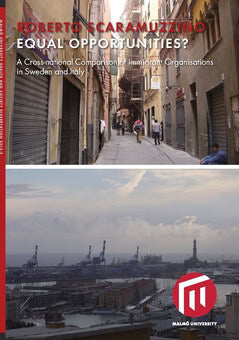
Titel: Equal opportunities?
Undertitel: A cross-national comparison of immigrant organisations in Sweden and Italy
Förlag: Malmö högskola
Genre: Samhälle, politik och debatt
Artikelnr: 46220214
Equal opportunities? av Roberto Scaramuzzino hittar du under genren Emigration & immigration inom Etnografi, socialantropologi & etnologi i kategorin Politik & samhällsvetenskap. Hitta fler liknande böcker:
Hitta fler liknande böcker med dessa ämnesord:

Skönlitteratur i svenska skolor handlar inte bara om underhållning utan erbjuder en kraftfull pedagogisk källa. Genom att utveckla empati, etisk medvetenhet och kritiskt tänkande, stärker litteraturen elevernas förståelse för samhällets...
Skönlitteratur i svenska skolor handlar inte bara om underhållning utan erbjuder en kraftfull pedagogisk källa. Genom att utveckla empati, etisk medvetenhet och kritiskt tänkande, stärker litteraturen elevernas förståelse för samhällets...

Upplev Sylvia Plaths fascinerande värld där personlig turbulens möter konstnärligt skapande. Utforska hennes poetiska arv, genomsyrat av teman som död, identitet och depression, och upptäck hur hennes livserfarenheter formade litteraturhistorien.
Upplev Sylvia Plaths fascinerande värld där personlig turbulens möter konstnärligt skapande. Utforska hennes poetiska arv, genomsyrat av teman som död, identitet och depression, och upptäck hur hennes livserfarenheter formade litteraturhistorien.

Julia Quinn, mästaren bakom Bridgerton-serien, har revolutionerat romancegenren genom att smälta samman historisk exakthet med modern relevans.
Julia Quinn, mästaren bakom Bridgerton-serien, har revolutionerat romancegenren genom att smälta samman historisk exakthet med modern relevans.

Upplev en gripande och poetisk resa i Niels Fredrik Dahls roman Fars rygg, där ensamhetens tyngd och identitetens sökande utforskas genom komplexa relationer mellan far och son. Boken balanserar melankoli...
Upplev en gripande och poetisk resa i Niels Fredrik Dahls roman Fars rygg, där ensamhetens tyngd och identitetens sökande utforskas genom komplexa relationer mellan far och son. Boken balanserar melankoli...
