
Artikeln har lagts till i varukorgen
Artikeln har lagts till i varukorgen
Santérus Förlag
Ny bok | Häftad
Läs mer om olika typer av bindningar här.
LEVERANS: Beställningsvara. Vår ambition är att den skickas inom 10-21 vardagar.
LEVERANS: Vi skickar din beställning med Postnords Varubrev eller DHL Servicepoint.
Du betalar alltid endast 49 kr i fraktavgift inom Sverige, oavsett vikt eller antal böcker vid beställning av antikvariska och nya böcker från oss! Läs mer
Det gick inte att ladda hämtningstillgänglighet
ENDAST 49 kr i fraktavgift inom Sverige, oavsett antal böcker!
Du betalar alltid endast 49 kr i fraktavgift inom Sverige, oavsett vikt eller antal böcker vid beställning av antikvariska och nya böcker från oss! Läs mer
ÅNGERRÄTT inom 14 dagar efter leverans.
RETUR & ÅNGERRÄTT: Du har alltid 14 dagars ångerrätt oavsett anledning, från den dagen du tar emot din leverans.
Skulle vår beskrivning av skicket på boken misstämma eller om vi på annat sätt gjort fel, står vi självfallet för returfrakten.
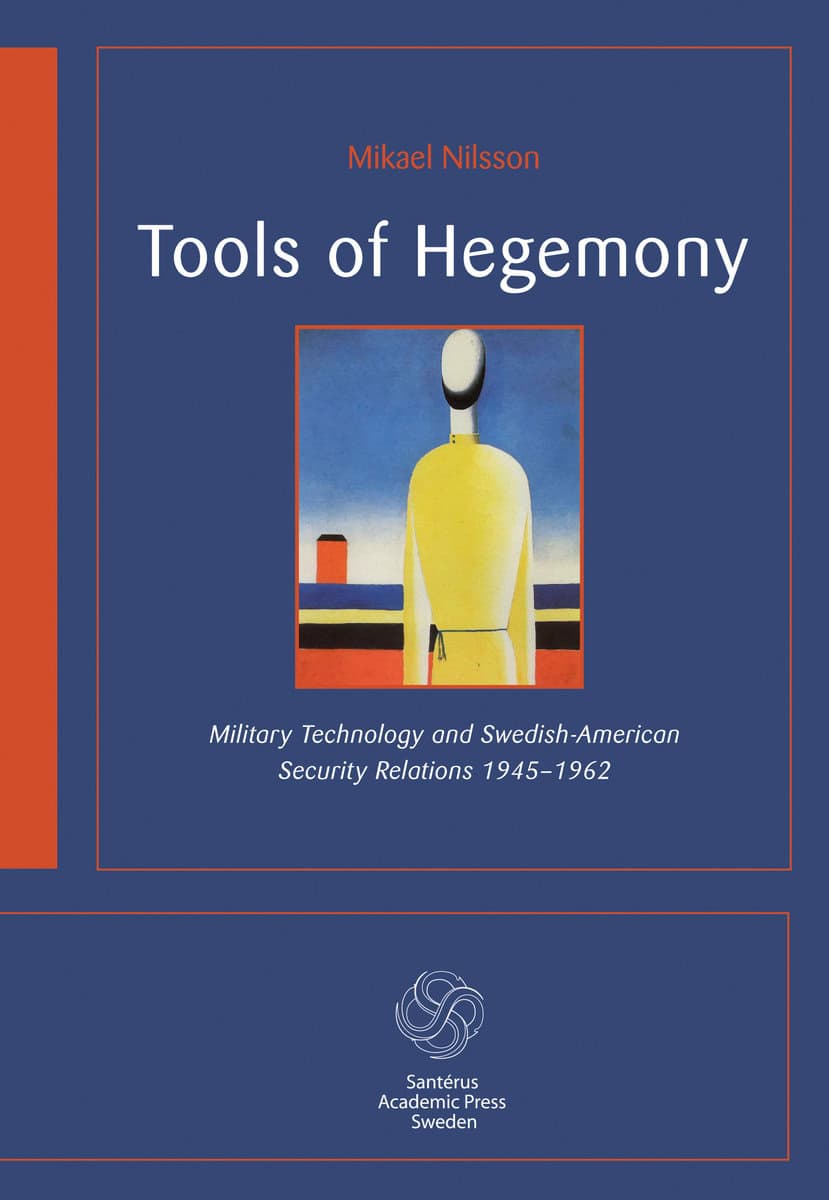
I KORTHET: Exploring Swedish-American cooperation during the Cold War and its impact on Swedish guided missile development.
I Tools of hegemony utforskar du Sveriges militära relationer med USA under kalla kriget. Boken ger insikter om hur svensk försvarsteknik formades av amerikansk dominans. Den är särskilt intressant för dig som vill förstå komplexiteten i internationella relationer och Sveriges roll som allierad. Du kommer att få en djupare förståelse för hur geopolitik och teknik samverkar.
In this book, the author traces the origins of the domestic Swedish guided missile development effort, and shows how an effective Swedish air defense presupposed the consent to American hegemony. The hegemonic cooperation was established through a series of crucial decisions made by the Swedish government to tacitly give its consent to American hegemony in European and world affairs. This process started in 1948 with the Swedish participation in the Marshall Plan and can be considered to have been finalized in 1952 when President Truman made Sweden eligible for reimbursable armaments deliveries from the United States. In 1959 Sweden purchased the Sidewinder Guided Missile from the United States. This was the confirmation of the fact that Sweden had become a trusted and close ally of the U.S. in the Cold War in Europe. But in order to become eligible for purchasing American military technology, Sweden had to consent to American hegemony. The focus of the study is the effort to develop Swedish-made guided missiles for the Swedish Army and Air Force 1945-1962. These efforts were stymied by the lack of funding and know-how, and therefore. Nilsson concludes that Swedish cooperation with the United States during the Cold War cannot be viewed as a series of exceptions to the rule of the policy of neutrality, but that hegemonic theory permits the display of sovereignty that Sweden s policy gave expression to. The Swedish consent to American hegemony was constant throughout the period studied, just as the American acceptance of Swedish foreign policy behavior and its recognition of Sweden as an ally in the Cold War. The reason for denying Sweden access to guided missiles had nothing to do with American apprehensions regarding the policy of neutrality, but with the U.S. government s lack of trust in its allies overall including the NATO countries. Likewise, the decision to finally release these missiles to Sweden had to do with American concerns for the credibility of its leadership in the eyes of its European allies. Mikael Nilsson, b. 1976, is a researcher at the Royal Institute of Technology in Stockholm, Sweden. He has previously published articles on Swedish Security Policy during the Cold War in international publications.
Bindning: Häftad. 8:o (153x229 mm)År: Utg. 2007. Omfång: 462 s. ISBN: 9789173350075. Språk: Engelska
Författare: Nilsson, Mikael
Titel: Tools of hegemony
Undertitel: Military technology and Swedish-American Security Relations 1945-1962
Förlag: Santérus Förlag
Genre: Historia och arkeologi
Artikelnr: 176295234
Tools of hegemony av Mikael Nilsson hittar du under genren Internationella relationer inom Samhälls- & rättsvetenskap i kategorin Politik & samhällsvetenskap. Hitta fler liknande böcker:

Skönlitteratur i svenska skolor handlar inte bara om underhållning utan erbjuder en kraftfull pedagogisk källa. Genom att utveckla empati, etisk medvetenhet och kritiskt tänkande, stärker litteraturen elevernas förståelse för samhällets...
Skönlitteratur i svenska skolor handlar inte bara om underhållning utan erbjuder en kraftfull pedagogisk källa. Genom att utveckla empati, etisk medvetenhet och kritiskt tänkande, stärker litteraturen elevernas förståelse för samhällets...

Upplev Sylvia Plaths fascinerande värld där personlig turbulens möter konstnärligt skapande. Utforska hennes poetiska arv, genomsyrat av teman som död, identitet och depression, och upptäck hur hennes livserfarenheter formade litteraturhistorien.
Upplev Sylvia Plaths fascinerande värld där personlig turbulens möter konstnärligt skapande. Utforska hennes poetiska arv, genomsyrat av teman som död, identitet och depression, och upptäck hur hennes livserfarenheter formade litteraturhistorien.

Julia Quinn, mästaren bakom Bridgerton-serien, har revolutionerat romancegenren genom att smälta samman historisk exakthet med modern relevans.
Julia Quinn, mästaren bakom Bridgerton-serien, har revolutionerat romancegenren genom att smälta samman historisk exakthet med modern relevans.

Upplev en gripande och poetisk resa i Niels Fredrik Dahls roman Fars rygg, där ensamhetens tyngd och identitetens sökande utforskas genom komplexa relationer mellan far och son. Boken balanserar melankoli...
Upplev en gripande och poetisk resa i Niels Fredrik Dahls roman Fars rygg, där ensamhetens tyngd och identitetens sökande utforskas genom komplexa relationer mellan far och son. Boken balanserar melankoli...
